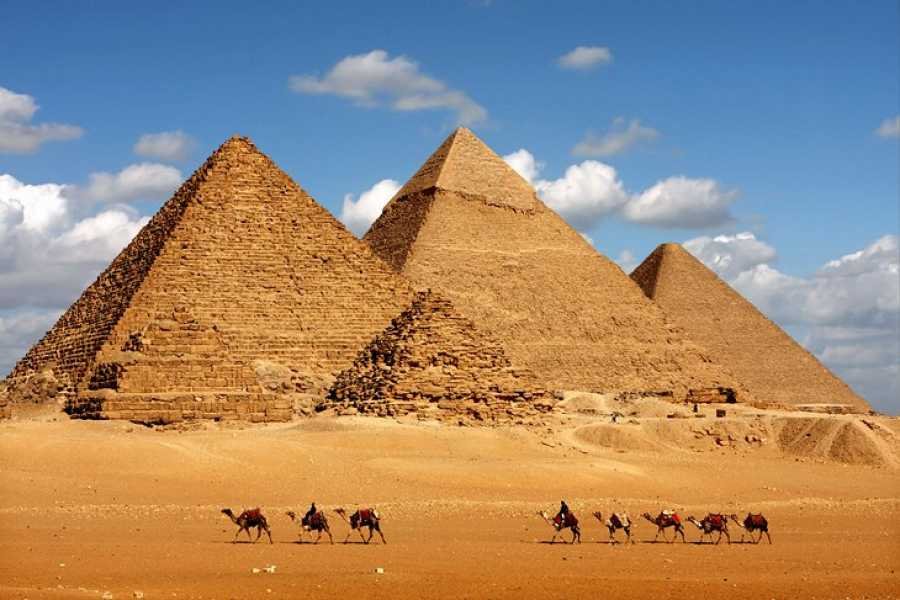
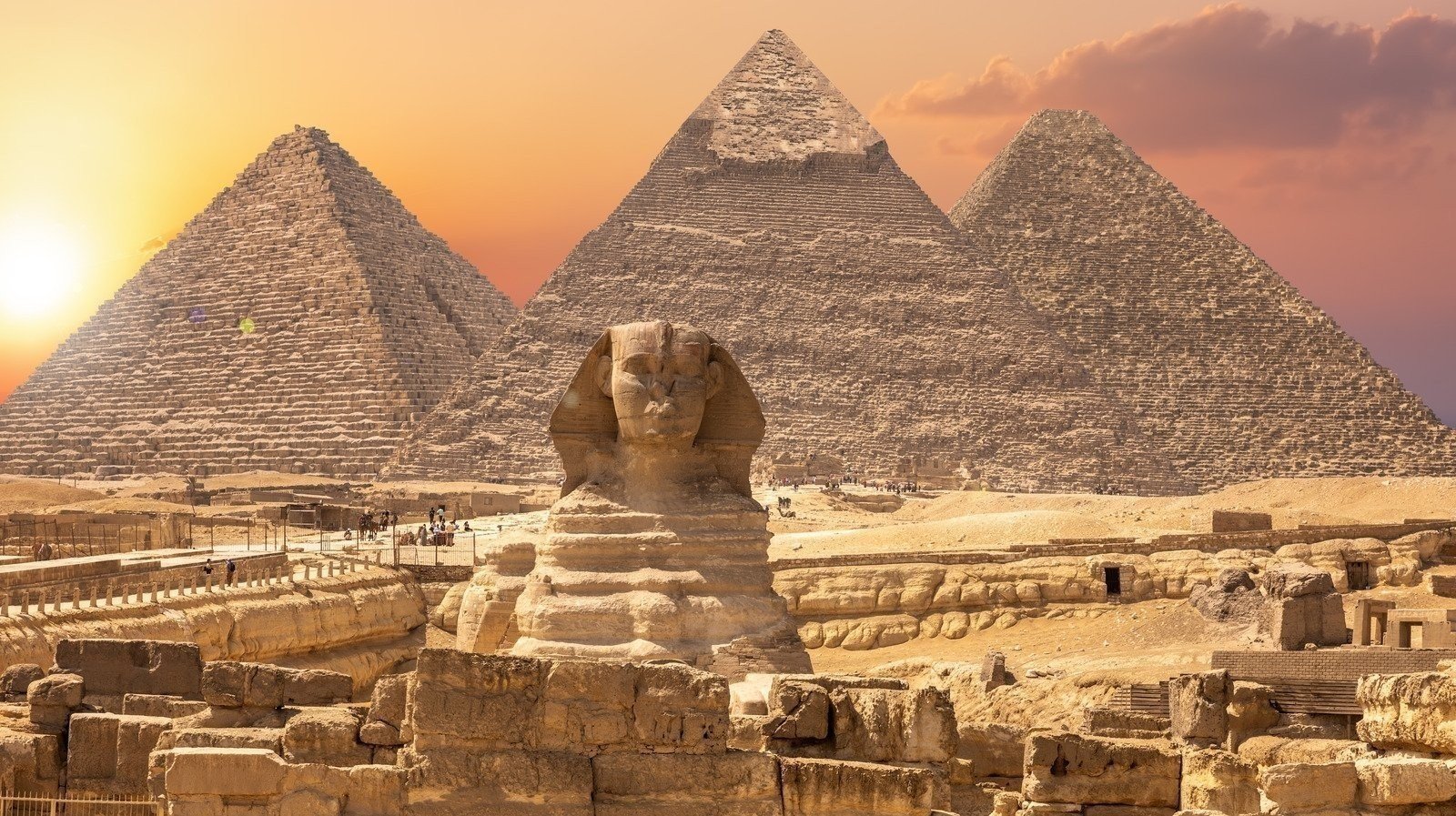
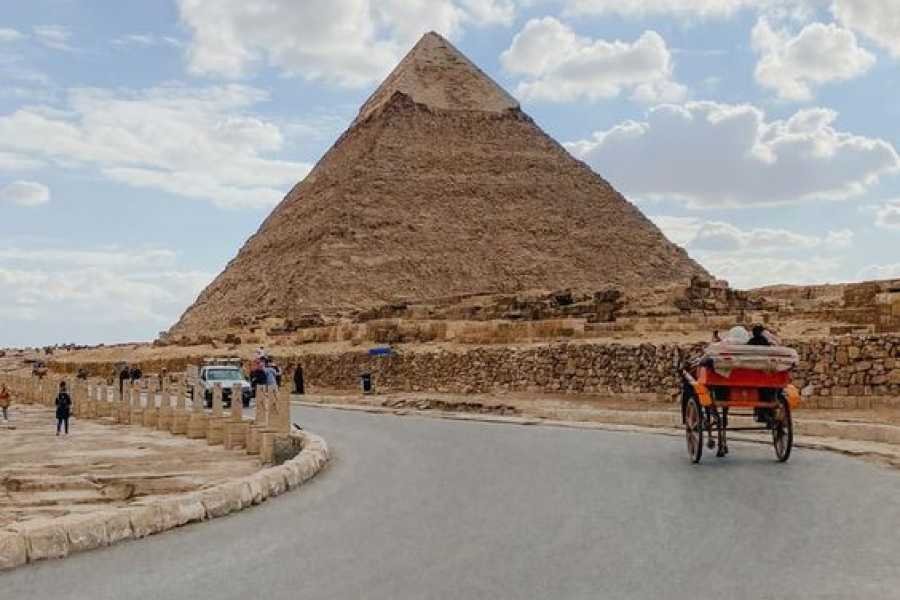
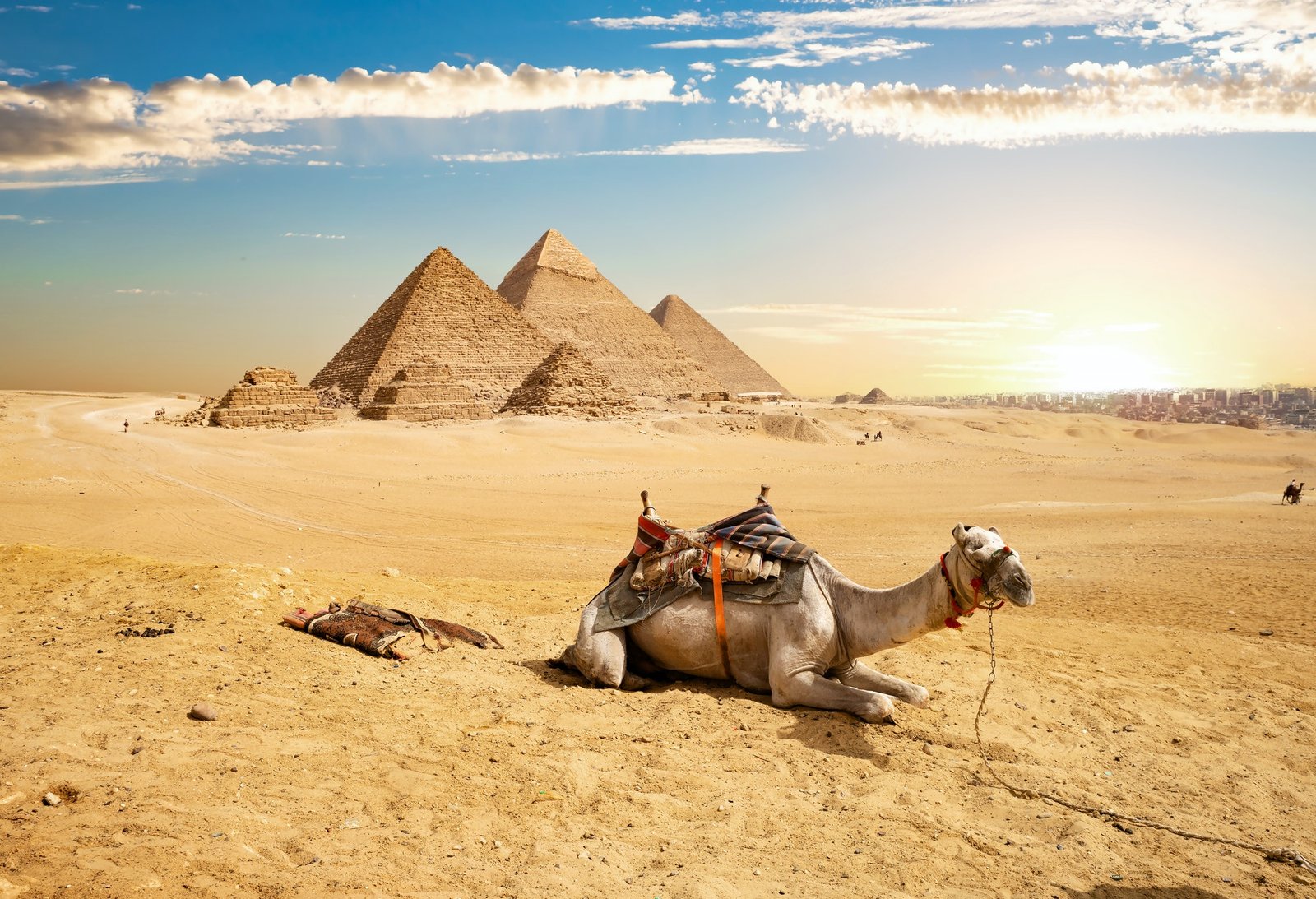
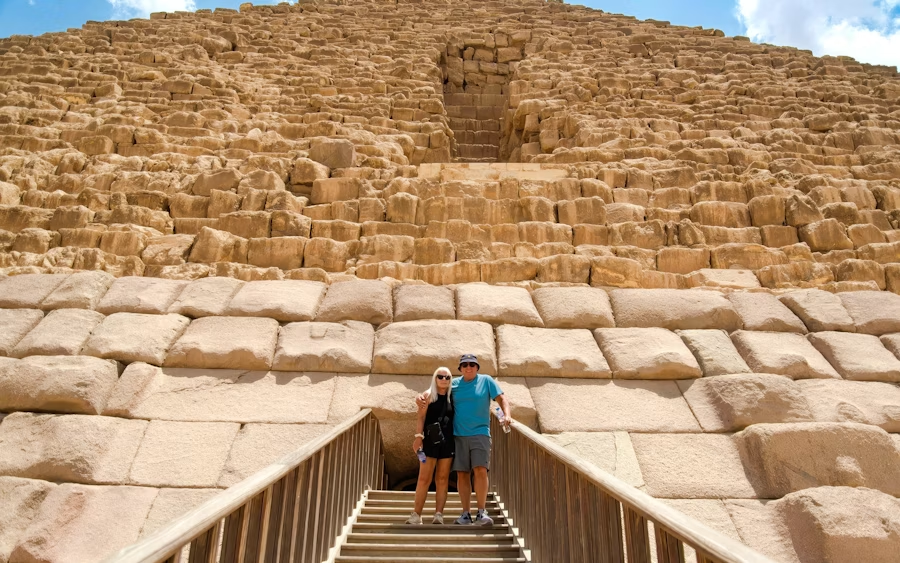
The Great Pyramid of Giza, Pyramid of Khufu, on the Giza Plateau in Egypt
Ancient Egypt • Pyramid of Khufu • History • Visitor Guide • Private Tours

The Great Pyramid of Giza: History, Facts & Visitor Guide

Discover the last surviving Wonder of the Ancient World. The Great Pyramid of Giza, also known as the Pyramid of Khufu or Cheops, is the largest of the three main pyramids on Egypt's Giza Plateau. Built around 4,500 years ago as the royal tomb of Pharaoh Khufu, it originally stood approximately 146.5 metres tall. Explore its remarkable history, limestone architecture and ancient interior chambers, and discover how to plan your visit.

Discover Ancient Egypt

What Is the Great Pyramid of Giza?

Imagine standing at the foot of a monument that was already ancient when some of the world's most famous civilisations were still developing. That is what makes the Great Pyramid of Giza so extraordinary.

Located on the Giza Plateau, just outside Cairo, the Great Pyramid was built as the royal tomb of Pharaoh Khufu, a ruler of Egypt's Fourth Dynasty. It is also known as the Pyramid of Khufu or the Pyramid of Cheops.

Unlike the smaller pyramids nearby, this colossal monument once reached a height of 146.5 metres. For approximately 3,800 years, it remained the tallest human-made structure in the world.

Today, the Great Pyramid is much more than an ancient tomb. It is a remarkable example of Egyptian engineering, a symbol of the country's extraordinary history and the only surviving Wonder of the Ancient World.

The Giza pyramid fields became part of the UNESCO World Heritage Site known as Memphis and its Necropolis in 1979.

Ancient Egypt · Fourth Dynasty

The History of the Great Pyramid of Giza

The story of the Great Pyramid begins during Egypt's Old Kingdom, when powerful pharaohs commissioned enormous monuments intended to secure their place in the afterlife.

The pyramid was constructed during the reign of Khufu, who ruled around 2589–2566 BC according to the Egyptian Ministry of Tourism and Antiquities.

At that time, Egypt possessed an organised administration, skilled craftspeople and extensive knowledge of stoneworking. Constructing a monument of this scale required careful planning, a large workforce and sophisticated logistics.

The Great Pyramid was not built in isolation. It formed part of a larger royal funerary complex that included temples, subsidiary pyramids and associated burial structures.

Over thousands of years, the monument has survived environmental changes, the loss of much of its original exterior casing and countless generations of visitors.

Yet its essential form remains unmistakable.

Great Pyramid of Giza and ancient Egyptian pyramid landscape
The Great Pyramid of Khufu on Egypt's historic Giza Plateau.

Who Was Pharaoh Khufu?

Khufu, also known by the Greek name Cheops, was a pharaoh of Egypt's Fourth Dynasty.

Although his pyramid is one of the most recognisable buildings in human history, comparatively little is known about Khufu's personal life.

His most enduring legacy is the enormous funerary monument at Giza, which demonstrates the organisational and technical capabilities of ancient Egyptian society.

Ancient pyramids at Giza associated with Egypt's Fourth Dynasty

Why Was the Great Pyramid Built?

The Great Pyramid was constructed as a royal tomb for Pharaoh Khufu.

Ancient Egyptian religious beliefs placed great importance on death, burial and the continuation of existence in the afterlife.

Royal pyramid complexes were therefore not simply monumental buildings. They were closely connected to religious rituals, kingship and the ancient Egyptian understanding of eternity.

The Great Pyramid's internal chambers and surrounding funerary structures reflect this important spiritual purpose.

Giza pyramids archaeological landscape near Cairo
Ancient Engineering · Pyramid Construction

How Was the Great Pyramid of Giza Built?

One of the most fascinating questions about the Great Pyramid is also one of the most difficult to answer completely: how did ancient Egyptian builders construct such an enormous monument?

The pyramid was built primarily from locally quarried limestone. Its original exterior was covered with fine white limestone brought from Tura, across the Nile.

These carefully finished casing stones once gave the monument a much smoother appearance than the stepped limestone blocks visible today.

The Egyptian Ministry of Tourism and Antiquities estimates that construction took approximately 10 to 20 years.

Researchers have proposed different methods for transporting, raising and positioning the massive stones. Ramps, sledges, coordinated labour and other engineering techniques feature in these explanations.

What remains uncertain? Although researchers have developed several explanations for pyramid construction, the complete construction sequence remains a subject of research.

What is clear is that the pyramid represents an extraordinary achievement in ancient planning, craftsmanship and engineering.

Who Built the Great Pyramid of Giza?

The Great Pyramid was built by ancient Egyptian workers under the authority of Pharaoh Khufu.

Archaeological evidence from the Giza Plateau supports the existence of organised labour communities involved in pyramid construction.

The popular image of an enormous pyramid built entirely by enslaved people is not supported by the available archaeological evidence.

Instead, the construction project involved skilled workers, organised teams and extensive systems for supplying food, materials and equipment.

Why Is the Great Pyramid So Impressive?

Its extraordinary scale is only part of the story.

The Great Pyramid required builders to coordinate stone transportation, prepare a massive foundation and construct a highly organised internal system of passages and chambers.

Even today, standing beside its enormous limestone blocks gives visitors a striking sense of the effort involved.

The monument also demonstrates the precision and ambition of ancient Egyptian architecture on a scale rarely matched in antiquity.

More than 4,500 years later, the Great Pyramid of Giza continues to inspire visitors, archaeologists and engineers from around the world.

What Is Inside the Great Pyramid of Giza?

From the outside, the Great Pyramid appears almost solid. Inside, however, a network of passages and chambers reveals another side of its extraordinary architecture.

The pyramid contains three principal chambers: one cut into the bedrock beneath the structure and two situated higher within the masonry.

Its best-known interior features include the Grand Gallery and the King's Chamber.

The Grand Gallery

The Grand Gallery is one of the most impressive architectural spaces inside the Great Pyramid.

This tall, ascending passage features a corbelled stone ceiling, with successive layers of masonry projecting inward as they rise.

Its design demonstrates the remarkable skill of the ancient builders.

Walking through this space offers visitors a completely different perspective on the pyramid's engineering.

Ascending Grand Gallery passage inside the Great Pyramid of Giza
Grand Gallery · Photo: Mike McBey, CC BY 2.0
Corbelled stone ceiling of the Grand Gallery inside Khufu's Pyramid
Stone ceiling · Mike McBey, CC BY 2.0

The King's Chamber

The King's Chamber is located high within the pyramid's masonry.

Constructed with granite, it contains the stone sarcophagus traditionally associated with Pharaoh Khufu.

Unlike the richly decorated royal tombs of the New Kingdom in Luxor, the King's Chamber has a remarkably austere appearance.

Its significance lies in its ancient construction, its position within the pyramid and its connection to the royal burial complex.

Granite walls and interior of the King's Chamber in the Great Pyramid of Khufu
King's Chamber · Photo: Andrew Currie, CC BY 2.0

Can You Go Inside the Great Pyramid?

Yes. Visitors can enter the Great Pyramid when its interior is open to the public and they hold the appropriate admission ticket.

The interior experience involves narrow passages, inclined sections and confined spaces. Some areas require visitors to walk in a crouched position.

It can be physically demanding, particularly for people who are uncomfortable in enclosed spaces or have mobility limitations.

Before booking, check the latest access conditions and any temporary restrictions.

Is Going Inside the Great Pyramid Worth It?

For many history enthusiasts, entering the Pyramid of Khufu is a memorable experience. However, it is worth considering what you will actually see and how comfortable you are with the interior conditions.

✓ Why Go Inside?

  • Experience the ancient passages from within.
  • See the remarkable Grand Gallery.
  • Discover the austere King's Chamber.
  • Gain a closer appreciation of ancient Egyptian engineering.

Things to Consider

  • Some passages are narrow, steep and enclosed.
  • The interior is not richly decorated with paintings.
  • Entry may require an additional ticket.
  • Access can be restricted or temporarily unavailable.

Our advice: If you love ancient architecture and are comfortable in confined spaces, going inside can be a highlight of your Giza visit. If you prefer panoramic views and photography, exploring the pyramids from outside may be more enjoyable.

Plan Your Private Giza Pyramids Visit ↗
Ancient Egypt · Amazing Discoveries

7 Fascinating Facts About the Great Pyramid of Giza

From its extraordinary height to its ancient engineering, discover seven remarkable facts about the Great Pyramid of Giza, also known as the Pyramid of Khufu or Cheops.

  1. The Only Surviving Ancient Wonder

    The Great Pyramid is the only surviving Wonder of the Ancient World. It has outlasted the other six monuments traditionally included in the ancient list.

  2. Originally 146.5 Metres Tall

    Its original height made it the tallest human-made structure in the world for approximately 3,800 years.

  3. Built for Pharaoh Khufu

    The monument was constructed for Pharaoh Khufu and served as the centrepiece of his royal funerary complex.

  4. Once Covered in White Limestone

    Fine limestone casing stones originally covered the pyramid's exterior, giving it a smooth, bright white appearance.

  5. Three Principal Chambers

    The pyramid contains three principal chambers. One was cut into the bedrock, while two were constructed within the pyramid itself.

  6. Construction Is Still Being Studied

    Researchers continue to investigate exactly how ancient Egyptian builders organised and completed this extraordinary construction project.

  7. UNESCO World Heritage Since 1979

    The Great Pyramid belongs to the UNESCO World Heritage Site of Memphis and its Necropolis, including the pyramid fields from Giza to Dahshur, inscribed in 1979.

Plan Your Visit · Giza Plateau

Visiting the Great Pyramid of Giza: Practical Travel Guide

Seeing the Great Pyramid in photographs is impressive. Standing beside it is something else entirely.

The surrounding Giza Plateau offers opportunities to admire the monument from different perspectives, explore other ancient structures and appreciate the scale of Egypt's royal pyramid complexes.

A little planning can make the experience considerably more enjoyable.

01 · Location

Where Is the Great Pyramid Located?

The Great Pyramid stands on the Giza Plateau, west of the Nile, in the Greater Cairo area.

It is part of the Giza pyramid complex, which also includes the pyramids of Khafre and Menkaure, the Great Sphinx and several associated archaeological monuments.

Visitors travelling from Cairo or Giza can reach the plateau by road. Travel times vary considerably depending on traffic and the starting location.

02 · Admission

Great Pyramid of Giza Tickets and Entrance Fees

Visiting the wider Giza Plateau and entering the interior of the Great Pyramid are separate admission arrangements.

According to the Egyptian Ministry of Tourism and Antiquities' published monument listing, foreign visitor admission for the Great Pyramid interior is listed at:

Foreign adults 1,000 EGP
Eligible students 500 EGP

Important: An additional Giza Plateau entry ticket is required. Prices and eligibility rules may change.

Check Official Monument Information ↗
03 · Timing

What Is the Best Time to Visit the Great Pyramid?

Early morning is often a comfortable choice, especially during warmer months. The plateau offers limited shade, while midday heat can make sightseeing tiring. Cooler months are generally more pleasant for walking, although popular periods can be busier. Check current opening hours before travelling.

04 · Duration

How Long Do You Need at the Great Pyramid?

Allow time to admire the monument from outside. Entering the pyramid may require additional time for ticket checks, queues and internal passages. Exploring the wider Giza Plateau, including the other pyramids and Great Sphinx, calls for a longer visit. Your ideal duration depends on your interests and travel arrangements.

05 · Preparation

What Should You Wear When Visiting?

Choose comfortable walking shoes for uneven surfaces, sand and exposed stone. Lightweight clothing, sun protection and drinking water are useful in warm weather. If you plan to enter the Great Pyramid, wear clothing and footwear suitable for narrow passages and inclined sections.

Understanding the Giza Plateau

Great Pyramid of Giza vs the Pyramids of Giza: What's the Difference?

One Monument

The Great Pyramid of Giza

Refers specifically to the pyramid built for Pharaoh Khufu, also known as Cheops.

It is the largest of the three principal pyramids on the Giza Plateau.

Three Principal Pyramids

The Pyramids of Giza

Usually refers collectively to the three principal royal pyramids: Khufu, Khafre and Menkaure.

The wider archaeological complex also includes the Great Sphinx, smaller pyramids, tombs and other ancient structures.

Planning tip: Understanding the difference between the Great Pyramid and the wider Pyramids of Giza helps you choose the right entrance tickets, allocate enough sightseeing time and select a suitable guided excursion.
Explore More · Giza & Cairo

What Else Can You See Near the Great Pyramid?

The Great Pyramid is only one highlight of the Giza area. Discover other remarkable ancient monuments and museum collections that can enrich your visit.

The Great Sphinx of Giza with its lion body and human head
01 · Ancient Monument

The Great Sphinx of Giza

One of ancient Egypt's most recognisable monuments, the Great Sphinx features the body of a lion and the head of a human. It stands within the same archaeological landscape as the pyramids.

Pyramid of Khafre on the Giza Plateau with surviving limestone casing near the summit
02 · Royal Pyramid

The Pyramid of Khafre

This pyramid is particularly recognisable for the surviving limestone casing near its summit. Its elevated position can make it appear taller than Khufu's pyramid from some viewpoints.

Grand Egyptian Museum near the Giza Plateau in Egypt
03 · Museum Experience

The Grand Egyptian Museum

Located near the Giza Plateau, the Grand Egyptian Museum provides an opportunity to explore ancient Egyptian civilisation through archaeological collections and museum exhibitions.

The Experience · Ancient Egypt

Is the Great Pyramid of Giza Worth Visiting?

Absolutely, particularly for travellers interested in ancient history, architecture and the origins of monumental engineering.

The Great Pyramid is not famous simply because of its size. Its real significance lies in the civilisation that created it and the questions it continues to inspire.

Standing beside a structure built more than four millennia ago creates a connection with history that photographs and documentaries cannot fully reproduce.

For many visitors, understanding the pyramid's purpose, construction and relationship to the surrounding monuments makes the experience even more memorable.

A knowledgeable guide can help bring these stories together and explain details that are easy to overlook during an independent visit.

Frequently Asked Questions

Great Pyramid of Giza FAQ

Find answers to the most frequently asked questions about the Great Pyramid of Giza, including its age, construction, interior access and private guided visits.

01 How old is the Great Pyramid of Giza?

The Great Pyramid of Giza is approximately 4,500 years old. It was built during the reign of Pharaoh Khufu in Egypt's Fourth Dynasty.

02 Who built the Great Pyramid of Giza?

Ancient Egyptian workers built the pyramid under Pharaoh Khufu. Archaeological evidence points to organised labour teams and skilled craftspeople.

03 Can tourists go inside the Great Pyramid?

Yes, when the interior is open and visitors have the appropriate ticket. The experience includes narrow passages and confined spaces.

04 How tall was the Great Pyramid originally?

The Great Pyramid originally stood 146.5 metres tall. It has lost some of its original height and exterior casing over time.

05 Is the Great Pyramid the same as the Pyramids of Giza?

No. The Great Pyramid of Giza refers specifically to the pyramid built for Pharaoh Khufu. The Pyramids of Giza usually refers to the three principal pyramids of Khufu, Khafre and Menkaure on the Giza Plateau.

06 Is the Great Pyramid one of the Seven Wonders?

Yes. It is the only surviving monument among the traditional Seven Wonders of the Ancient World.

07 Can I visit the Great Pyramid on a private tour?

The Great Pyramid can be visited as part of a private Giza sightseeing itinerary. Transport, guiding and entrance arrangements should be confirmed with the tour provider before booking.

Great Pyramid of Giza and the famous ancient Egyptian pyramids near Cairo Giza Pyramids · Egypt
Discover Egypt with egyVibes

Explore the Great Pyramid of Giza with egyVibes Private Tours

Visiting the Great Pyramid is an unforgettable experience. Understanding its history, exploring the Giza Plateau and discovering the stories behind its ancient monuments can make your journey even more rewarding.

At egyVibes, we specialise in organising private sightseeing experiences across Egypt. Whether you're staying in Cairo, Giza or one of Egypt's popular holiday resorts, our team can help you explore suitable private tour options to the Great Pyramid of Giza.

Enjoy a personalised approach to discovering Egypt's remarkable heritage, with itinerary and departure arrangements confirmed according to your location and travel plans.

  • Private sightseeing experiences
  • Personalised itinerary planning
  • Tour options from Egyptian cities and resorts, subject to availability

Tour routes, departure locations and arrangements are confirmed individually.